Resources

Publications and mentions

Browse our publications here

  • Policy brief digital copy (1)

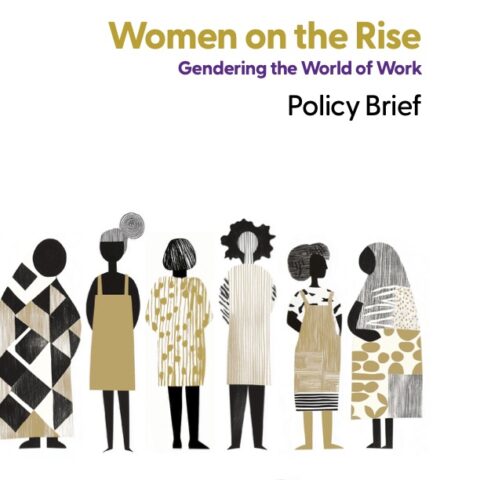
    Women on the Rise

    Gendering the World of Work

    This policy brief highlights women’s paid and unpaid labor as the cornerstone of gender equality, and specifically addresses GBVH in the world of work. The brief demonstrates the links between ILO C190 and two critical areas of concern with BPfA: violence against women, and women and the economy.

    The brief is addressed to governments and multilateral institutions, with a view to influencing committments from Member States on Beijing+30, during the 69th session on the Commission on the Status of Women (CSW69) in March 2025, at the High-Level Political Forum on Sustainable Development (HLPF) focused on the review of Sustainable Development Goals 5 (gender equality) and 8 (decent work) in July 2025, as well as at the 80th session of the UN General Assembly (UNGA 80) in September 2025.

    The policy brief is a joint publication of Asia Floor Wage Alliance (AFWA), Global Labor Justice (GLJ), and Feminist
    Alliance for Rights (FAR).

  • Women Crew

    Contribution on Sexual and Reproductive Health and Rights in Situations of Crisis

    In 2021, FAR submitted a formal contribution to the UN Working Group on Discrimination Against Women and Girls (WGDAWG) in response to its call for submissions on women and girls’ sexual and reproductive health and rights (SRHR) in contexts of crisis. The document was grounded in a global consultation process that FAR coordinated beginning in November 2019 – before the COVID-19 pandemic transformed “contexts of crisis” from a policy abstraction into lived global reality. The consultation brought together activist experts from four regions: Africa, Asia, Latin America, and the Middle East and North Africa (MENA), centering the voices and analysis of those working closest to the communities most affected.

    The resulting contribution reflects the challenges, core concerns, and concrete recommendations that emerged from that process — documenting how existing structural inequalities in access to sexual and reproductive health and rights are systematically deepened in moments of crisis, and what governments and international bodies must do to prevent and remedy those harms.

    This contribution reflects FAR’s model: feminist policy advocacy built from the ground up, with Global South expertise at the center, directed at the international mechanisms with the power to hold States accountable.

    FAR’s submission was cited in A/HRC/47/38, the WGDAWG’s thematic report on SRHR in crisis situations, adopted by the Human Rights Council at its 47th session.

  • Wr irwin 2ck9drj

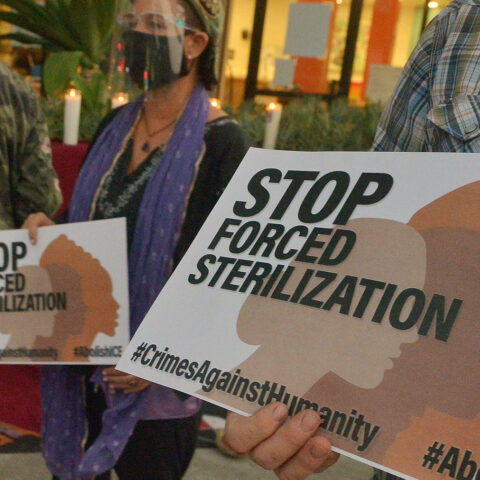
    Communication Adressing U.S. Violations of International Law at Immigration Detention Facilities in the U.S. State of Georgia and Calling for a Coordinated Site Visit and International Condemnation

    In November 2020, FAR joined a coalition of nine legal, human rights, and women’s rights organizations in submitting an urgent communication to the UN Special Rapporteur on violence against women and the UN Working Group on Discrimination Against Women and Girls – with copies to six additional UN mandate holders, including the Special Rapporteurs on torture, racism, and the rights of indigenous peoples.

    The communication documented a pattern of non-consensual sterilizations and invasive gynecological procedures performed on detained immigrant women at the Irwin County Detention Center (ICDC) in Ocilla, Georgia – operated by the for-profit private prison corporation LaSalle Corrections, Inc. under contract with US Immigration and Customs Enforcement (ICE). At least 57 women were subjected to procedures by a contracted gynecologist without their informed consent, in many cases without adequate interpretation, and in some cases after being lied to about what was being done to their bodies. ICDC staff themselves described the physician as “the uterus collector.”

    The communication argued that these acts constituted violations of the ICCPR, the Convention Against Torture, and the Convention on the Elimination of All Forms of Racial Discrimination -and called for an independent site visit, a full investigation, protection of the women from retaliation, and an end to immigrant detention.

    The coalition brought together transnational feminist advocacy, frontline legal representation, reproductive rights expertise, and grassroots organizing: the Transnational Legal Clinic at the University of Pennsylvania Carey Law School, Project South, Detention Watch Network, Georgia Detention Watch, the Georgia Latino Alliance for Human Rights (GLAHR), the South Georgia Immigrant Support Network, the Center for Reproductive Rights, and the Continental Network of Indigenous Women of the Americas.

    The Irwin County Detention Center was subsequently closed.

  • Infografía1

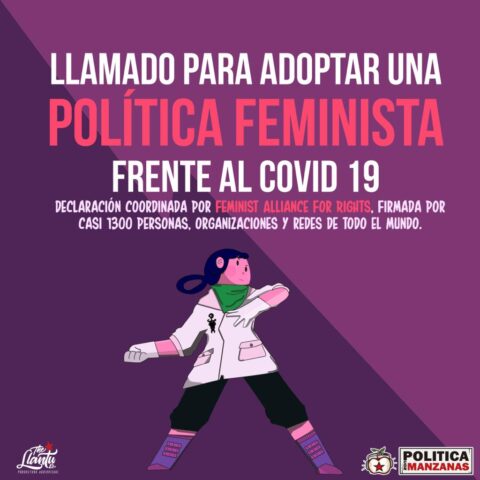
    How organizations used FAR’s Feminist COVID-19 Statement to protect women’s human rights

    Introductory note: The following examples were documented in May 2020 and reflect the rapid adoption of FAR’s Feminist COVID-19 Statement across regions in the weeks following its publication on March 20, 2020. They are preserved here as a record of FAR’s convening impact during the early months of the pandemic.

    What followed demonstrated the real reach of FAR’s transnational model: organizations and activists around the world did not just endorse the statement – they translated it, adapted it, took it to their governments, and used it to demand accountability.

  • WhatsApp Image 2026 03 20 at 14.12.19

    Statement of Feminists and Women’s Rights Organizations from the Global South and marginalized communities in the Global North

    In less than three months after COVID-19 was declared a global pandemic, this statement was endorsed by more than 1,600 individuals and women’s networks and organizations from more than 100 countries, calling on States to adopt a feminist policy to address the extraordinary challenges posed by the pandemic in a manner consistent with human rights standards and principles.

    Initiated by women from the Global South and from marginalized communities in the Global North, this initiative was coordinated by the Feminist Alliance for Rights (FAR) — and was among the first feminist policy responses published globally, appearing on March 20, 2020, just nine days after the WHO pandemic declaration. It has been cited in peer-reviewed scholarship as one of the most widely circulated feminist interventions of the pandemic (Al-Ali, 2020, European Journal of Politics and Gender).